
Magnesium for Sleep: Benefits, Best Types, and Dosage Guide

Does magnesium help with sleep? Different types of magnesium are available, and numerous clinical studies have found that magnesium levels affect sleep quality. If you have difficulty falling asleep or staying asleep, the right magnesium may help. Magnesium is a mineral that is essential to good health. It supports nerve signaling, muscle function and other biochemical reactions in the body. Not all magnesium supplements are the same, so it is important to understand the different types, how they interact with the body’s systems and the best magnesium dosage for sleep.
TL;DR:
What should you look for in magnesium? Magnesium comes in different forms, and magnesium glycinate is the best form of magnesium for sleep. It is the form the digestive system tolerates best and has the least laxative effect compared to the others. Magnesium citrate is taken to support sleep and ease constipation. Magnesium L-Threonate is being studied as a sleep aid as it crosses the blood-brain barrier and may improve daytime brain functioning. Magnesium oxide causes gastrointestinal effects, especially diarrhea. When shopping for magnesium glycinate for sleep, look for the amount of elemental magnesium per serving. This is the total amount of magnesium the body absorbs. Know the daily magnesium target, counting food and supplements. Also look for high-quality products that are third-party lab tested.
How Magnesium Promotes Better Sleep
One of the most important things you do each day is sleep. Sleep restores mental and physical functions. It replenishes energy, consolidates learning and memory and supports recovery of the immune and endocrine systems. Most adults need at least seven hours of sleep each night, with 85% of sleep being high quality or undisturbed. Yet, surveys of U.S. adults found:
- 56% experience sleep disturbances
- 55-69% have trouble falling asleep
- 63-78% have trouble staying asleep
- 31-52% have generally poor sleep quality
Does magnesium help with sleep? Among natural sleep aids, magnesium supplements stand out for many reasons. People take magnesium for sleep because it helps them address one or more sleep quality issues.
GABA Activation
Neurotransmitters govern the sleep-wake cycles by acting on sleep-regulating substances in the brain. There are two categories. One is wake-promoting systems involving neurotransmitters such as serotonin and histamine. The second group is sleep-promoting systems and includes the neurotransmitters adenosine and GABA (gamma-aminobutyric acid).
When the brain is overactive, it becomes difficult to fall asleep and stay asleep. Magnesium binds to and activates GABA receptors to quiet brain activity. Increased GABA activity slows overactive neural transmissions. By slowing down the brain’s neural activity, the mind is quieter, and the nervous system is less excitable.
Melatonin Regulation
The natural hormone melatonin is well known for supporting the body’s natural circadian rhythm, the sleep-wake cycle. The mineral magnesium influences how your body creates and regulates melatonin. The combination of magnesium helps relax muscles and calm the nervous system while improving melatonin, contributing to better sleep.
Stress & Muscle Relaxation
Magnesium supports relaxation, helping the mind unwind before bedtime. Magnesium also lowers cortisol levels, which is the primary stress hormone that causes alertness at night. It does so by modulating the HPA (hypothalamic-pituitary-adrenal) axis. By lowering cortisol and activating GABA, stress feelings are reduced, making it easier to fall asleep and stay asleep.
Magnesium also has an important role in muscle activity. Strong research evidence suggests it may relieve physical restlessness that interferes with sleep, such as restless leg syndrome, by calming overactive nerves and relaxing muscles.
Magnesium is also associated with muscle contractions. When calcium is not blocked, nerves become overactivated and trigger muscle contractions. Magnesium is believed to act as a calcium channel blocker, leading to muscle calming and relaxation. Calcium causes muscles to contract when too much enters muscle cells. Magnesium competes with the calcium channels, blocking the calcium influx. It also blocks the calcium channels at nerve endings. This reduces the release of a chemical messenger called acetylcholine, calming the nerve signaling in the muscles.
Types of Magnesium Compared: Which Is Best for Sleep
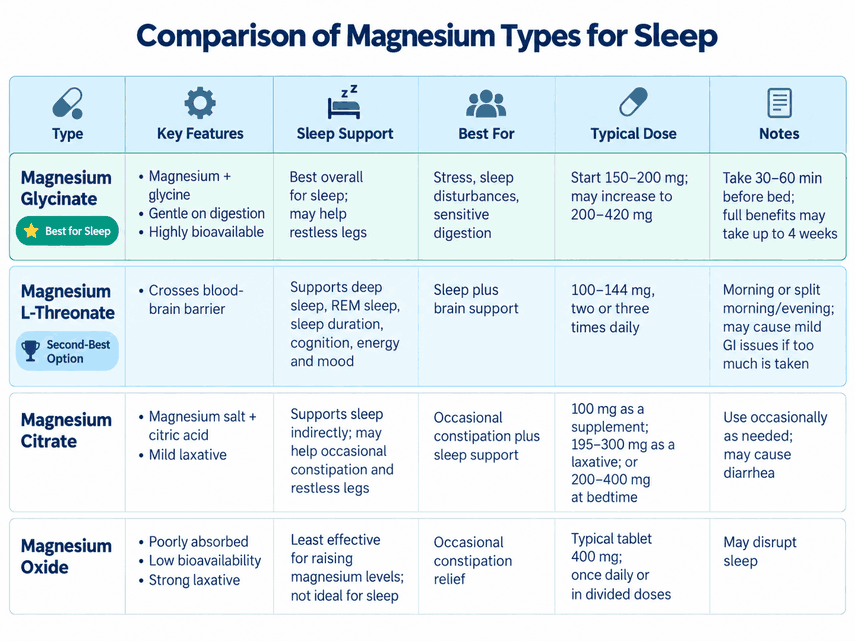
Four types of magnesium are commonly taken. They work differently and have different goals.
Magnesium Glycinate
Magnesium glycinate is a combination of the amino acid glycine and magnesium. Glycine is a calming neurotransmitter, so combining it with magnesium enhances the effects on sleep. Magnesium glycinate is the supplement known to be the most gentle on the digestive system and is considered one of the most bioavailable forms. For these reasons, it is often chosen to support restful sleep and a relaxing bedtime routine.
Because magnesium glycinate can calm nerves, it may help address restless leg syndrome.
It can take up to four weeks to experience the full benefits of magnesium glycinate. It is best to take it 30-60 minutes before bedtime to give it time to work. The recommended starting dose is usually 150-200 mg of elemental magnesium, which you can increase to 200-420 mg as you assess the effects.
Keeping the dose at 400-420 mg per day will help you avoid diarrhea or an upset stomach from excessive magnesium. Magnesium glycinate is the preferred magnesium form for people with sensitive digestive systems. If you do experience digestive issues, you can take it with a meal.
Magnesium L-Threonate
L-Threonate is an acid that is formed through the breakdown of vitamin C during metabolism. It is a unique magnesium carrier. Magnesium L-Threonate can cross the blood-brain barrier, so it may offer cognitive benefits. It has shown the potential to improve deep sleep, REM sleep and sleep duration while improving daytime energy and mood. After magnesium glycinate, it is often the best magnesium for sleep.
A typical dose is 100-144 mg of elemental L-Threonate magnesium taken two or three times daily. It usually only causes mild gastrointestinal issues when taking too much. You can take it with food. Also, magnesium L-Threonate is typically taken in the morning or in two doses: one in the morning and one in the evening.
Magnesium Citrate
Magnesium citrate is made by combining magnesium salt and citric acid. It softens stool by working like a saline laxative. It pulls water into the intestines. It works like a saline laxative. Magnesium citrate is commonly used to relieve occasional constipation because of the mild laxative effect. It is taken only occasionally, as needed. One advantage of this magnesium form is that it has a dual purpose. Magnesium supports better sleep, and relieving constipation may enhance sleep.
A pilot study found magnesium citrate may improve restless leg syndrome. Study participants took 200 mg of magnesium citrate for eight weeks. Most had a significant reduction in restless leg syndrome symptoms.
Generally, a dose of the liquid form is 100 mg of elemental magnesium if used as a supplement. If taking it as a laxative, then 195-300 mg in one dose or divided into doses throughout the day. An alternative is taking 200-400 mg at bedtime, though this presents the risk of experiencing diarrhea, which can disrupt sleep.
Magnesium Oxide
Unlike magnesium glycinate for sleep, magnesium oxide is poorly absorbed in the body. It has a strong laxative effect and can relieve constipation by emptying the bowels quickly. It is also used as a dietary supplement, but its laxative effects can disrupt sleep. Because of its low bioavailability, it is the least effective at increasing magnesium levels in the bloodstream.
Typical dosage tablets include 400 mg tablets of elemental magnesium. You could take one 400 mg capsule once a day or 1-3 mg capsules in doses spread throughout the day.





Dosage and Best Practices
• Recommended Dose: The typical recommended dosage when using magnesium for sleep is 200-400 mg daily. Staying within the upper limit reduces your risk of gastrointestinal issues.
More magnesium does not necessarily mean better sleep. Also, it is important to make sure you are taking 200-400 mg of elemental magnesium. Product labels may list the total weight of the magnesium compound, which is the full molecule formed when magnesium binds to a carrier substance, such as an amino acid. Magnesium Glycinate and Magnesium Citrate are magnesium compounds.
Elemental magnesium is the active amount of the mineral. Think of it as pure magnesium. Health guidelines refer to elemental magnesium.
• Timing: Magnesium glycinate is considered the best magnesium for sleep. It promotes stress relief and relaxation. It seldom causes digestive issues. Taking it 30-60 minutes before bedtime gives your body time to absorb the magnesium.
You may want to take magnesium citrate if you need sleep support and an osmotic laxative for occasional constipation. What is the best time to take magnesium citrate vs. glycinate for sleep? Ideally, take magnesium glycinate 30-60 minutes before bedtime. You can take magnesium citrate in the morning or during the day, unless you want the laxative effect to occur at night. It takes anywhere from 3-6 hours to work.
• Consistency: Magnesium is a mineral nutrient and not a sleeping pill. When low magnesium is the issue, taking magnesium on a consistent schedule makes more sense than taking a tablet like a sleeping pill for sleep difficulties. You want to increase your body’s magnesium levels, which is likely to improve sleep.
Dietary Sources vs. Supplements
It is always best to get nutrients from food first. When figuring out how much magnesium to take, you want to include intake from food. The following are some of the food sources that are rich in magnesium.
- Pumpkin seeds
- Spinach and other dark leafy greens
- Almonds
- Dark chocolate
- Whole grains, i.e., brown rice, quinoa, whole oats
- Legumes, i.e., black beans, edamame
- Peanut butter
Contemporary lifestyle factors and lower nutrient density in foods, due to soil depletion and crop production practices, make it challenging to consistently get enough magnesium each day.
Lifestyle factors have changed how many people absorb and use nutrients. Chronic stress increases cortisol levels. Poor diets, prescription medications and increasing digestive issues either deplete magnesium or interfere with the ability to absorb the mineral.
Also making it more difficult to get magnesium through diet are the changes in agricultural practices that have altered soil quality. For example, repeatedly growing the same crop in the same soil depletes minerals. Crops are bred to grow faster, so they do not have enough time to absorb soil nutrients fully. Chemical farming is also contributing to declining food nutrient density.
Side Effects, Safety, and Interactions
Magnesium supplements are usually well tolerated as long as you stay within the recommended dosage. However, keep a few things in mind.
Potential Digestive Issues
Knowing how much magnesium to take for sleep in any situation is crucial to avoiding issues. Magnesium side effects from sleep supplements mainly include digestive risks. Taking too much of any form of magnesium can lead to digestive issues developing, such as nausea, diarrhea and abdominal cramping.
Some People Need Medical Oversight
Some people should not take magnesium supplements without a doctor’s oversight. Anyone with kidney disease or compromised renal function has kidneys that cannot filter and remove excess magnesium. Too much magnesium can build up in your system. Toxicity can cause neuromuscular, cardiovascular and respiratory issues.
People with neuromuscular disorders should not take magnesium without doctor supervision. Magnesium blocks the release of acetylcholine, which is needed for muscle contraction. This can worsen the person’s condition.
Also, anyone with a heart condition should consult a doctor before taking magnesium supplements. Magnesium plays a critical role in healthy nerve and muscle functioning, including the heart. Anyone with a slow heart rate or taking heart medications should not take magnesium supplements without doctor oversight.
Women who are pregnant or nursing should always check with their doctor before taking any supplements.
Potential Interactions with Medications
Magnesium can interact with some drugs because they use the same pathways in the body. In these cases, magnesium can reduce drug absorption.
Magnesium supplements can bind to the antibiotics in your stomach, decreasing bioavailability. This prevents absorption of antibiotics.
Also, magnesium should not be combined with muscle relaxant drugs. Both compounds work to relax the muscles. Taking them together can lead to excessive muscle relaxation as nerve transmission is slowed.
Magnesium Plays Important Role in Sleep
Magnesium glycinate for sleep, followed by Magnesium L-Threonate, are the forms that promote sleep quality with the least risk of gastrointestinal issues. The key is to take the proper magnesium dosage for sleep and avoid taking too much. It is not a cure-all for sleep problems, though. As natural sleep aids, magnesium forms should be paired with good sleep hygiene habits. These include establishing a regular sleep schedule, keeping the bedroom dark and quiet and not eating three hours before bed or drinking alcohol in the evening, to name a few. The magnesium forms are called supplements because they add to and support wellness needs but do not replace healthy lifestyles.
Sources
- https://pubmed.ncbi.nlm.nih.gov/35184264/
- https://pmc.ncbi.nlm.nih.gov/articles/PMC12535714/#s0003
- https://pmc.ncbi.nlm.nih.gov/articles/PMC12535714/#s0004
- https://pmc.ncbi.nlm.nih.gov/articles/PMC12639720/
- https://pmc.ncbi.nlm.nih.gov/articles/PMC12251677/
- https://pmc.ncbi.nlm.nih.gov/articles/PMC9804944/
- https://pmc.ncbi.nlm.nih.gov/articles/PMC11508242/
- https://pmc.ncbi.nlm.nih.gov/articles/PMC10745813/
- https://pubmed.ncbi.nlm.nih.gov/40918053/
- https://pmc.ncbi.nlm.nih.gov/articles/PMC11381753/
- https://pubmed.ncbi.nlm.nih.gov/38738598/
- https://reference.medscape.com/drug/magnesium-citrate-342017
- https://dailymed.nlm.nih.gov/dailymed/fda/fdaDrugXsl.cfm?setid=9119b7f0-3e8a-7be7-e053-2995a90a4634
- https://nutritionsource.hsph.harvard.edu/magnesium/
- https://pmc.ncbi.nlm.nih.gov/articles/PMC10969708/
- https://www.ncbi.nlm.nih.gov/books/NBK554593/
- https://www.ncbi.nlm.nih.gov/sites/books/NBK519036/
- https://pmc.ncbi.nlm.nih.gov/articles/PMC12189353/
- https://ijirms.in/index.php/ijirms/article/view/1798
- https://pubmed.ncbi.nlm.nih.gov/21986576/
Share this post
